I spent several years working as an intake coordinator for civil rights and police misconduct matters in Southern California. Most of my days were spent listening first, then sorting through details that rarely came in a clean order. I was not in the courtroom, but I still saw how early decisions shaped entire cases. The work stayed with me long after I left the desk.
Most people did not call with a structured story. They called after long nights, hospital visits, or confusing encounters with paperwork they did not fully understand. I handled over 200 intake files in one year alone, and each one started with fragments instead of a full picture. I saw this often.
Some callers would pause for long stretches, trying to decide what to say first. Others spoke quickly, almost as if slowing down would make the memory harder to hold. I remember a customer last spring who kept repeating the same three details because everything else felt too heavy to organize. Those calls required patience more than anything else.
In many situations, I would ask simple grounding questions, like where the incident began or what time of day it happened. Even then, answers would shift as people remembered new details mid-call. It was common for someone to correct themselves several times during a single intake. That was normal.
Once intake notes were complete, I passed them to attorneys who focused on police misconduct review and civil rights claims. One of the firms I interacted with most frequently was https://www.moseleycollins.com/police-misconduct-lawyer-in-los-angeles-ca.html, where early screening decisions often determined whether a case moved forward or required more documentation. That step mattered because missing details could slow everything down for weeks. I saw cases pause simply because a single report had not been requested yet.
The review process was not fast, and it was never supposed to be. Attorneys would often flag contradictions between statements and initial reports, and I would be asked to follow up with clients for clarification. A simple note about a location or timeline could take two or three additional calls to confirm. One sentence can change direction.
Some cases moved forward quickly when video evidence or witness statements were available early. Others stayed in review for months while teams gathered records from hospitals or public agencies. I remember one situation where a small detail about a patrol car number helped connect separate reports into one consistent file. That kind of alignment rarely happened by chance.
One of the hardest parts of my job was explaining missing documentation to people who expected immediate answers. Reports from public agencies were not always complete, and body camera footage was sometimes delayed or partially unavailable. I worked with files often enough to see how much time went into reconstructing events from incomplete records. That gap shaped nearly every case discussion I was part of.
I remember a caller who insisted the timeline was clear, but the written report showed overlapping times that did not match witness statements. We spent days trying to reconcile those differences through follow-up notes and additional interviews. It was not unusual for small contradictions to grow into larger questions about credibility or procedure. Nothing stayed simple for long.
Evidence gaps were not always intentional. Sometimes paperwork just did not travel correctly between departments, and other times it was a matter of delayed reporting systems. I learned to document everything carefully, even when it seemed repetitive. A missing detail could become important later in ways nobody expected.
People often expected updates faster than the system could realistically provide. I would receive weekly calls asking if anything had changed, even when the case was still in early review stages. The waiting period was difficult for many clients because it felt like silence meant inaction. It rarely did.
Some clients would share the same story multiple times just to feel certain they had not forgotten anything important. I understood that repetition was not confusion but pressure. A man I spoke with over several months once told me he kept notes on his phone because his memory of the event shifted depending on the day. That stayed with me.
There were also moments of relief when a case moved forward, even slightly. A single update from a records request or witness confirmation could change the tone of an entire conversation. I once had a caller go quiet for a few seconds before saying they finally felt heard. Those pauses mattered.
Not every case reached resolution quickly. Some stayed open longer than expected, with new information arriving in small pieces over time. I learned that patience was not passive in this work. It was active attention, held across weeks or months of uncertainty.
Looking back, the intake desk was less about paperwork and more about translating human experience into something usable for legal review. The details mattered, but so did the way they were held and revisited over time. Even now, I still think about how many early notes shaped outcomes long after the first call ended.
When people talk about old sci-fi being “predictive,” they usually point to specific inventions.
Video calls. Tablets. Space travel.
But after going through a lot of these films and books, I’ve noticed something else.
They rarely got the details exactly right.
What they got right was how those ideas would change people.
There’s a scene where astronauts casually use flat screens to watch content and communicate.
At the time, that felt distant and clinical.
Now it feels normal.
But what stands out isn’t just the screens. It’s how casually they’re used. No sense of wonder. Just part of the routine.
That’s exactly how technology ends up in real life. Not as something impressive, but something expected.
People often point out the communicators as early versions of mobile phones.
That’s fair.
But what feels more accurate now is how communication works in that show.
Instant, direct, always available.
Crew members expect to reach each other immediately. Delays feel unusual.
That mindset is very close to how we treat messaging and calls today.
It didn’t predict smartphones or apps.
What it captured was atmosphere.
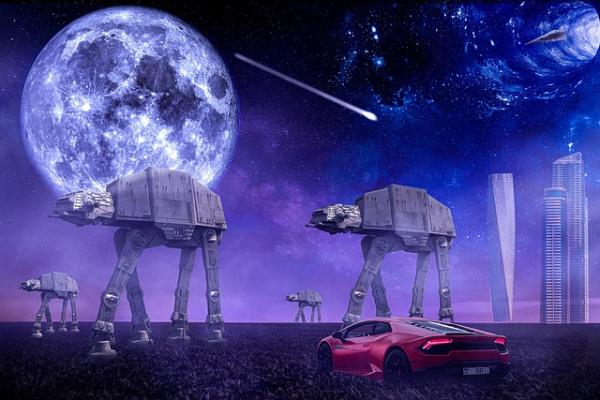
Crowded cities, constant advertising, technology blending into everyday life, and a sense that the line between human and artificial isn’t always clear.
You can walk through parts of modern cities and feel echoes of that vision.
Not identical, but familiar in tone.
Bradbury imagined walls filled with screens, constant content, and people becoming absorbed in it.
He wasn’t predicting streaming services directly.
He was pointing at a future where entertainment becomes continuous and immersive.
That part landed.
The idea that people could spend most of their time consuming content without stepping back to question it feels very current.
Flying cars didn’t happen the way it showed.
But automated homes, voice-controlled devices, and machines handling daily tasks did arrive.
What it got wrong was how quickly and how evenly those changes would spread.
What it got right was the idea that daily routines would be assisted by technology in small, constant ways.
This one is much older, but it still comes up in discussions for a reason.
It showed a world where people are part of large systems that control how they live and work.
Not machines taking over completely, but humans adapting to systems that feel bigger than them.
That idea shows up today in different forms—automation, large networks, digital platforms shaping behavior.
After going through all these, one pattern keeps showing up.
Vintage sci-fi wasn’t great at predicting exact inventions.
It was good at predicting pressure points.
Communication becoming instant
Entertainment becoming constant
Cities becoming more intense
Technology blending into daily life
Those themes show up again and again.
The reason these older works still feel accurate isn’t because they got everything right.
It’s because they focused on human reactions.
How people adapt
How habits change
How systems affect daily life
Technology changes shape, but behavior follows patterns.
Once a story captures that pattern, it stays relevant even if the details age.
After spending time with these older films and books, modern technology feels less surprising.
Not because it’s simple, but because the direction was visible earlier than we think.
The tools changed. The scale changed.
But the way people use them, depend on them, and sometimes get overwhelmed by them—that part was already there.
And that’s why going back to vintage sci-fi never really feels outdated.
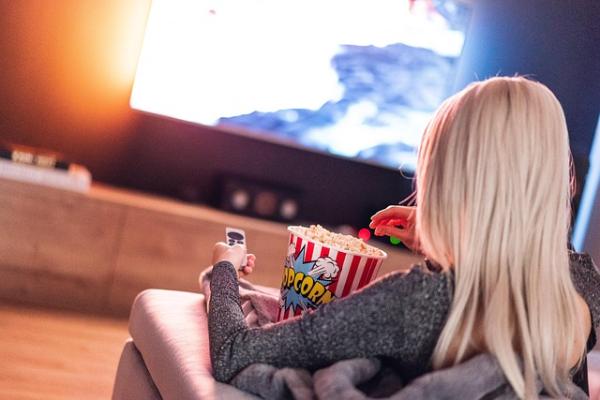
When I was younger, the TV wasn’t just a device. It was the center of the room.
A heavy box, usually placed on a stand that didn’t move much once it was set.
You didn’t choose what to watch as much as you chose from what was already playing. Shows had time slots. If you missed it, you missed it.
I remember adjusting antennas just to get a clearer picture. Sometimes the signal would drop slightly and everyone would notice immediately.
There was a shared rhythm to it. Everyone watched the same thing at the same time because there wasn’t much alternative.
Then came the ability to record.
VHS tapes gave people a way to hold onto content. You could watch something later, replay it, build a small collection.
But it still required effort.
You had to plan recordings, manage tapes, label them. If you recorded over something by accident, it was gone.
I used to help a neighbor set up recordings for weekly shows, and it always felt like setting a trap—timing had to be exact.
It was the first step toward control, but not convenience.
When DVDs became common, the experience changed again.
Better picture, easier navigation, no rewinding.
But what really stood out was ownership.
People started building collections. Shelves filled with cases. Movies became something you curated, not just watched.
I remember setting up DVD players and seeing how excited people were just to skip scenes or jump to specific parts instantly.
It felt modern at the time, even though it still relied on physical media.
This is something people don’t always talk about.
Audio transformed the space as much as video.
When surround sound systems became more common, living rooms stopped being just viewing spaces and started feeling immersive.
I’ve installed systems where the speakers mattered more than the screen. Placement, wiring, calibration—it all changed how people experienced movies.
Even a simple action scene felt different when sound moved around the room.
The biggest shift came when content moved online.
No discs, no schedules, no storage.
You just opened an app and watched.
At first, it felt almost too easy. People didn’t fully trust it. Slow connections, buffering issues, limited catalogs.
But once internet speeds improved, everything changed.
I remember the moment a client told me they were getting rid of their entire DVD collection because they hadn’t used it in months.
That would have been unthinkable a few years earlier.
This sounds minor, but it’s not.
There was a time when the remote was everything. People guarded it like it controlled the entire experience.
Now, control shifted to apps, voice commands, phones.
I’ve seen setups where the remote barely gets used anymore.
You pick content directly from your device, not by flipping channels or inputs.
It’s a quieter change, but it shows how interaction has shifted.
The living room used to be the only real place for entertainment.
Now it’s everywhere.
Phones, tablets, laptops, multiple TVs in one house.
I’ve worked with families where everyone watches something different in the same room.
That shared experience hasn’t disappeared completely, but it’s no longer the default.
Before, the challenge was finding something to watch.
Now, the challenge is choosing.
Endless options sound ideal, but they create a different kind of problem.
I’ve seen people spend more time scrolling than actually watching.
Back when options were limited, decisions were easier. You watched what was available and moved on.
Now, there’s always something else, which makes it harder to settle.
Another shift that happened alongside all this was gaming.
It moved from being a niche hobby to a central part of entertainment setups.
Consoles became standard additions to living rooms.
I’ve set up systems where gaming mattered more than movies or TV.
It changed how people use screens—not just for watching, but for interacting.
Looking back, the evolution wasn’t just about better picture quality or more content.
It was about control.
Control over what you watch
When you watch
Where you watch
How you interact with it
Each step reduced friction.
From fixed schedules to recorded content
From physical media to digital libraries
From shared viewing to personal screens
The living room is still there, but it doesn’t dominate the way it used to.
Entertainment is more personal, more flexible, and less predictable.
Some people miss the shared experience of watching the same show at the same time.
Others prefer the freedom to watch anything whenever they want.
From what I’ve seen, neither is better.
They’re just different ways of experiencing the same thing.
And the shift happened slowly enough that most people didn’t notice it while it was happening.
People usually talk about technology in terms of efficiency.
Faster communication. Faster work. Faster everything.
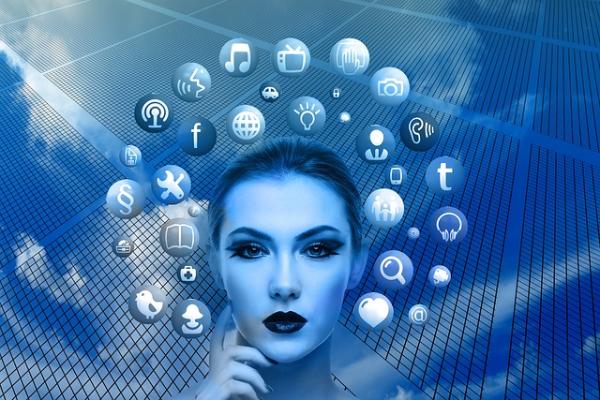
But the real change I’ve noticed isn’t just speed. It’s how the entire day gets rearranged around that speed.
What used to happen in blocks now happens continuously.
Before everything moved online, mornings had a natural buffer.
You woke up, got ready, maybe checked a newspaper or watched the news. Information came in limited doses.
Now the first thing most people do is reach for their phone.
Messages, notifications, updates—all waiting before you even get out of bed.
I noticed this shift in myself a few years ago. I went from easing into the day to starting mentally “on” within minutes.
It doesn’t feel dramatic, but it changes how your energy is used throughout the day.
There was a time when work and home were clearly separated.
You left the house, did your work, and came back.
Now, for a lot of people, work sits in the background all day.
Emails, messages, quick tasks—they don’t wait for a specific time or place.
I run most of my work online, and I’ve had to actively create boundaries. Otherwise, the workday never really ends. It just stretches.
Technology made work more flexible, but it also made it harder to switch off.
This is one of the biggest shifts.
Before, communication had friction.
You had to call, write, or meet someone. That meant you thought a bit before reaching out.
Now, messaging is instant and constant.
I’ve noticed conversations becoming shorter, more frequent, and sometimes less thought-out.
That’s not always a bad thing. It makes collaboration faster.
But it also means your attention is constantly being pulled in different directions.
Simple things like paying bills, shopping, or booking services used to require dedicated time.
You had to go somewhere, wait, and complete the task.
Now most of that happens in minutes, often without leaving your seat.
I remember setting aside half a day just to handle a few errands. Now I can do the same tasks between other activities without thinking much about it.
It saves time, but it also fills the day with small interruptions instead of clear blocks of activity.
There used to be a fixed time for entertainment.
TV shows aired at specific hours. Movies required planning.
Now everything is available instantly.
I’ve caught myself watching something for “just a few minutes” and losing track of time completely.
The structure is gone. You decide when to start and stop, which sounds like freedom but often requires more self-control.
This is one change I didn’t fully appreciate until I thought about it.
Getting lost used to be normal.
You asked for directions, used maps, or figured things out as you went.
Now navigation apps guide every step.
It’s incredibly useful, but it also means we rely less on memory and spatial awareness.
I’ve visited places multiple times and still couldn’t navigate them without a phone.
Technology made it easier to stay in touch.
You can message someone anytime, share updates instantly, and maintain connections across distance.
But those interactions are often lighter.
Before, you might meet less often but spend more focused time together.
Now communication is constant but sometimes fragmented.
It’s a different kind of connection—not necessarily worse, just different.
This is one of the most subtle but powerful changes.
Waiting used to be part of daily life.
Waiting in line, waiting for information, waiting for responses.
Now, most waiting is filled.
If there’s a pause, people check their phones.
I’ve noticed that patience feels different now. Even short delays can feel longer because we’re used to immediate access.
Technology made life more convenient in almost every way.
But it also removed natural breaks.
Moments where you had nothing to do, nothing to check, nothing to respond to.
Those gaps used to reset your mind without you realizing it.
Now, you have to create those pauses intentionally.
It’s not just what we do.
It’s how often we switch between things.
Work, communication, entertainment, errands—they all happen in the same space, often within the same hour.
That constant switching is the real shift.
Once you notice it, you start understanding why days feel faster but also more fragmented.
Technology didn’t just make life easier.
It made it more fluid.
Boundaries blurred. Tasks overlap. Time feels different.
Some people adapt quickly. Others struggle with the lack of structure.
From my experience, the people who handle it best aren’t the ones using the most tools.
They’re the ones who decide when to use them—and when not to.
If you go back far enough, you’ll find predictions about flying cars, underwater cities, and robots doing everything for us by now.
Most of those didn’t happen.
But every so often, you come across something that feels uncomfortably accurate. Not because it got every detail right, but because it understood the direction things were heading.
That’s what makes these worth paying attention to.
Long before smartphones, Tesla described a future where people could communicate instantly across long distances using small, portable devices.
At the time, that sounded abstract. Wireless communication itself was still developing.
He talked about information being transmitted globally and accessed easily, which is basically the foundation of modern internet-connected devices.
He didn’t describe apps or social media, but the core idea—a connected, wireless world in your hand—was there.
Clarke wrote about satellites being used to relay communications around the world decades before they became reality.
In the 1940s, he described geostationary satellites orbiting the Earth and enabling global communication networks.
That exact concept is now standard. Modern telecommunications rely heavily on satellites positioned in orbit, following the same basic principle.
At the time, though, it sounded like science fiction. Because it was.
Orwell’s vision in Nineteen Eighty-Four wasn’t meant as a prediction in a technical sense, but parts of it feel eerily familiar today.
He imagined a world where surveillance was constant and privacy was limited.
We don’t live in the exact system he described, but the idea of widespread monitoring—through cameras, data tracking, and digital footprints—has become a real part of modern life.
What he got right wasn’t the exact structure, but the direction of control through information.
Kurzweil made a series of predictions about computing power and artificial intelligence accelerating over time.
Some of his timelines were debated, and not everything has happened exactly as he said, but his core idea—that technology grows exponentially—has largely held up.
We’ve seen rapid advances in machine learning, automation, and AI tools that would have seemed unrealistic a few decades ago.
Even now, people still argue about how far it will go, which is part of the pattern with most accurate predictions—they sound extreme until they don’t.
McLuhan talked about the world becoming a “global village” through electronic media.
At the time, that meant television and early communication systems.
Today, it feels like a direct description of the internet era.
Information moves instantly. Cultural trends spread across countries in hours. People interact across continents as if distance barely exists.
He didn’t predict the platforms, but he understood the effect.
After going through dozens of old predictions, one thing stands out.
The ones that come true don’t usually focus on specific gadgets.
They focus on behavior.
Tesla didn’t predict smartphones exactly. He predicted instant communication.
Clarke didn’t predict modern satellite brands. He predicted global connectivity.
McLuhan didn’t predict social media apps. He predicted how media would shrink the world.
That’s the difference.
Predictions tied to human behavior tend to age better than predictions tied to specific technology.
Looking back, it’s easy to say these ideas were obvious.
They weren’t.
At the time, they challenged what people believed was possible.
Every accurate prediction goes through the same cycle:
It sounds unrealistic
It gets ignored or dismissed
It slowly becomes plausible
Then it becomes normal
By the time it feels obvious, it’s already happened.
The future rarely arrives in the exact form people imagine.
But the direction is often visible much earlier than we think.
If someone understands how people communicate, how they use tools, and how systems evolve, their predictions have a better chance of holding up.
Not perfectly. But close enough to recognize later.
And that’s what makes going back through these ideas interesting.
You’re not just looking at what people got right.
You’re seeing how early the future started showing up.